Montgomeryville Mitsubishi - Brake Pad and Rotor Replacement Essentials near Horsham, PA
Brake confidence is non-negotiable when your daily routes include Bethlehem Pike, the Five Points intersection, and the 202 Parkway. If you are hearing a light squeal in parking lots, feeling a faint vibration under gentle stops, or noticing a longer pedal travel, your vehicle may be due for pads, rotors, or both. This guide answers what drivers from Horsham, PA search for most: how to tell which parts need attention, what a professional brake service includes, and how to make smart choices that fit suburban stop-and-go driving.
How to Know It Is Time for Brake Service
Brake wear rarely arrives all at once. It builds through short trips to the supermarket, school pickup loops, and the steady roll of traffic on PA-309. Common cues include a squeal at low speeds from wear indicators touching the rotor, a chirp just before you stop, or a dashboard light that accompanies lower brake fluid in the reservoir. A pulse in the pedal or a shake in the steering wheel under moderate braking suggests rotor thickness variation or an uneven transfer layer. If the pedal feels soft or you need more distance to stop, the system needs immediate inspection. Teaching yourself to notice these early signals often saves both time and money later because minor concerns can quickly turn into metal-on-metal wear that shortens rotor life.
Technicians confirm what you are experiencing with measurements. Pad thickness in millimeters, rotor thickness against the discard spec, and runout measured in thousandths of an inch tell a clear story. Those numbers guide whether rotors can be resurfaced or should be replaced, and whether calipers slide freely or need attention. Real data makes for the right repair.
Pads, Rotors, and Materials: What Matters
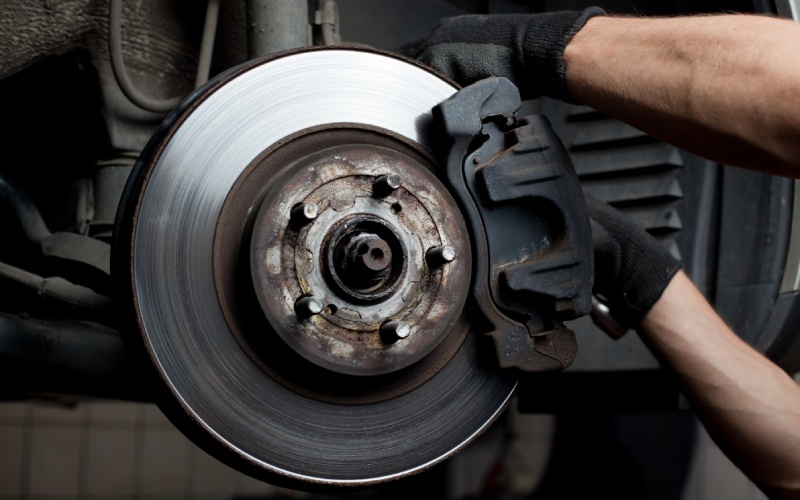
Most modern vehicles use floating calipers with pads that clamp onto a cast-iron rotor. Pads come in different friction materials, each with trade-offs you can feel around Horsham. Ceramic formulas typically deliver quieter stops, cleaner wheels, and stable performance across everyday temperatures. Semi-metallic pads can offer a strong initial bite and heat management, helpful if you carry heavier loads or drive hilly backroads. Organic pads are less common on late-model vehicles but still appear in certain applications. Whatever you choose, proper bed-in matters. A series of moderate decels seats the pads against the rotor surface, building a uniform transfer layer that reduces noise and improves feel.
Rotors are not all the same either. Vented rotors manage heat better than solid rotors in front-axle applications. Some designs include directional vanes that must be installed on the correct side to flow air properly. Coated rotors resist corrosion along the hat and edges, maintaining a cleaner appearance behind open-spoke wheels in slushy or salty conditions. Matching the right rotor to your driving profile helps avoid vibration and extends service life.
What a Professional Brake Service Includes
A thorough service is more than sliding in new pads. It begins with a road test to baseline pedal feel, noise, and pull. Wheels come off for a full visual, pad thickness is recorded, rotors are measured against minimum thickness and checked for runout, and caliper slide pins are inspected and lubricated. Hardware kits are replaced when needed to ensure even retraction and quiet operation. If rotors meet specifications and are true, resurfacing may restore a clean mating surface; if not, replacement ensures consistent braking and pad wear. Brake fluid condition is evaluated because moisture buildup lowers the boiling point and can cause a soft pedal during repeated stops. The final step is torqueing lugs to spec, performing a bed-in procedure, and rechecking feel with a second road test. That complete approach delivers the quiet, confident stop you expect in town traffic and on higher-speed stretches.
Anti-lock braking systems and electronic brake distribution are integral to modern stopping performance. If a warning lamp has joined your brake symptoms, a scan with professional tools can find a wheel-speed sensor fault, a tone-ring issue, or a hydraulic control unit concern that piggybacks on mechanical wear. Addressing both mechanical and electronic sides ensures the car responds predictably when you brake over a slick manhole cover or metal expansion joint.
Why Local Driving Patterns Shape Brake Choices
Horsham traffic patterns mean frequent, moderate stops instead of long highway hauls. That points many drivers toward ceramic pads for quieter operation and cleaner wheels in neighborhood streets and shopping centers. If your routine includes towing a small trailer to local parks or you regularly navigate rolling two-lanes outside town, a semi-metallic pad may feel more reassuring under heat. Short trips also make rotor corrosion more likely because moisture evaporates less thoroughly, which is why coated rotors can pay for themselves by staying cleaner during start-stop schedules. No matter your choice, a proper bed-in is the equalizer that sets the system up for success.
Wheel and tire decisions also play a role. Upsized wheels and stickier tires increase available grip, which can raise brake temperatures under repeated stops. If you recently changed wheel diameter or tire compound, share that during your service write-up. It helps the technician tailor pad material, rotor selection, and fluid advice to real-world use, not a theoretical baseline.
Here is a simple ownership checklist that aligns with daily life in our area:
- Listen for new sounds: A faint squeal at low speeds is often a built-in wear indicator asking for inspection.
- Watch for pedal changes: A longer stroke or softer feel signals the need for service right away.
- Feel for vibration: Pulsation under light or moderate braking suggests rotor variation or deposits.
- Check the dash: ABS or brake lights point to electronic or hydraulic issues that pair with mechanical wear.
- Share your routes: Stop-and-go errand loops vs. hilly weekend drives can inform smarter pad and rotor choices.
If you are comparing brake quotes, ask what is included. Do they measure and record pad thickness and rotor specs, replace hardware where recommended, lubricate slide pins with the right compound, verify torque, and road test twice? The difference between quick parts replacement and a true brake service shows up in quiet operation, even wear, and a consistent pedal on Welsh Road or at the Route 309 ramps.
Frequently Asked Questions:
How often should I replace brake pads?
It depends on driving style and conditions. Many vehicles see 25,000 to 60,000 miles between pad services. Stop-and-go driving shortens intervals, while highway miles extend them.
Do rotors always need replacement with pads?
Not always. If rotors are within thickness spec and runout limits, resurfacing may suffice. If below spec, heat-checked, or uneven, replacement is the right call.
Why do I hear squealing after new pads?
Some pad formulations produce light noise during the initial bed-in. A proper seating process and clean, lubricated hardware usually quiet things quickly.
Can warped rotors be fixed?
True rotor warping is less common than thickness variation or uneven pad deposits. Measured resurfacing or replacement resolves the symptom.
What if my steering wheel shakes only when braking?
That often points to front rotor variation or deposits. Professional measurement and correction restore smooth stops.
Whether you are heading to the grocery store on Bethlehem Pike or merging onto PA-309, a smooth, predictable brake pedal builds everyday confidence. Our team brings certified expertise, OEM parts, and careful measurement to every brake job for results that last. If you are driving from just down the road or coming from neighborhoods near Horsham and North Wales, PA, schedule a visit and let us tailor a quiet, consistent brake setup to your routine. Montgomeryville Mitsubishi is here to help you stop with assurance on every trip.