Montgomeryville Mitsubishi - Breathe Easy on Every Drive With Air Filter Replacement near Lansdale, PA
Your vehicle takes in a surprising amount of air every minute — and the quality of that air matters. Clean filters protect your engine, keep your cabin comfortable, and help major systems do their jobs efficiently. If you commute along PA-309/Bethlehem Pike, hop onto the U.S. 202 Parkway, or spend time in stop-and-go traffic through Montgomeryville and Lansdale, dust, pollen, and road debris can load up your filters faster than you might expect. Knowing when to replace them — and which type to choose — pays off in smoother acceleration, cleaner airflow, and peace of mind.
Below, you will find a clear guide to common air filter types, practical replacement timelines, and simple ways to check your current filters. You will also see how our parts department streamlines the process with the right fit, right away, so you can get back to everyday driving with confidence.
Engine vs. Cabin: Two Filters, Two Jobs
Your vehicle uses at least two distinct filters. The engine air filter protects the engine by removing particles from the air before it mixes with fuel. A clean engine filter supports proper combustion, which helps throttle response and fuel economy. The cabin air filter, on the other hand, cleans the air that enters the interior through the HVAC system. A clean cabin filter improves airflow, reduces fogging, and can lessen odors or irritants from entering the vents.
If you drive a plug-in hybrid, like many drivers in Montgomery County do for the blend of electric and gasoline efficiency, you still have both filters. Fully electric vehicles skip the engine filter but still rely on a cabin filter to keep the interior air fresh and HVAC performance consistent.
Common Air Filter Types Explained
Not all filters are built the same. Understanding your options helps you match the right filter to your driving and maintenance style.
- Paper cellulose engine filter: The most common factory-style filter that balances strong filtration with dependable airflow, ideal for daily driving and OEM performance.
- Activated-carbon engine filter: A paper or synthetic media with a carbon layer that can help reduce certain vapors — used less often for engines but available for select applications.
- Oiled cotton reusable engine filter: A washable, reusable option that can be serviced with a cleaning kit; requires proper oiling and may not be ideal for every vehicle or mass air flow sensor.
- Foam pre-filter: Sometimes paired with performance or off-road setups to capture larger particles before they reach the primary media.
- Standard cabin particulate filter: Traps dust, pollen, and many airborne particles for cleaner interior air and better HVAC airflow.
- Activated-carbon cabin filter: Adds an odor-reducing layer that can help minimize exhaust smells and certain airborne irritants during rush-hour traffic.
- HEPA-grade cabin filter: A higher-efficiency option designed to capture finer particulates, helpful for drivers sensitive to allergens or pollution.
For most drivers around Lansdale and Montgomeryville, a high-quality OEM-style paper engine filter paired with an activated-carbon or HEPA-grade cabin filter delivers an excellent balance of protection, comfort, and value.
How Often To Replace — And What To Watch For
Always follow your owner’s manual first. As a general guideline, many vehicles call for an engine air filter inspection around 15,000 to 30,000 miles and a cabin filter replacement about every 12,000 to 15,000 miles or annually. Local factors — from construction dust along regional routes to frequent idling on Bethlehem Pike — can shorten these intervals.
- Engine filter warning signs: Noticeable drop in throttle response, rougher idle, reduced fuel economy, or visible dirt and debris when you inspect the filter element.
- Cabin filter warning signs: Weaker HVAC airflow, more persistent window fogging, lingering odors from vents, or increased sneezing and irritation during your drive.
If you cannot recall the last time the filters were checked, make it part of your next oil change. Quick inspections catch issues early and help you avoid avoidable wear on engine components and HVAC fans.
Quick DIY Checks You Can Do
Many owners like to take a quick look between service visits. If that is you, these simple steps keep you on track. If you would rather not DIY, our team is happy to handle everything.
- Find the locations: The engine filter usually sits in a rectangular or square air box under the hood; the cabin filter is often behind the glovebox or under the cowl near the windshield.
- Open carefully: Release the air box clips or screws and lift the cover evenly; for cabin filters behind the glovebox, lower the box gently after removing its side stops.
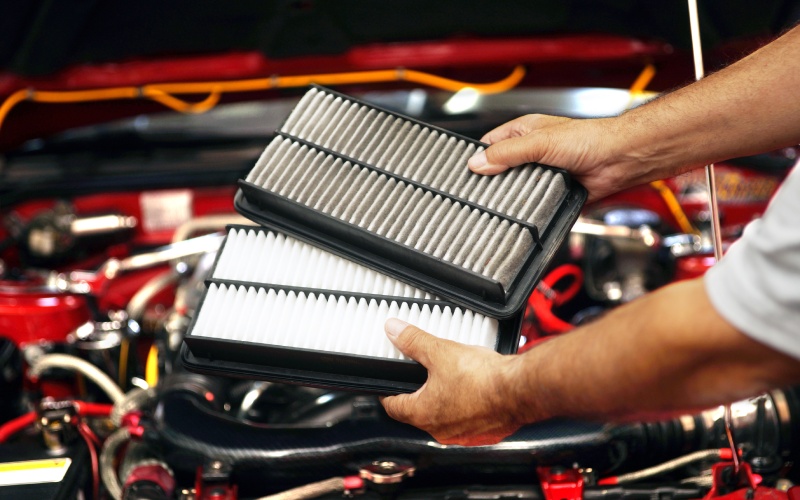
- Inspect the media: Hold the filter up to light — if you cannot see light through much of the surface or you see leaves, sand, or dark staining, it is time to replace.
- Watch orientation: Note airflow arrows on cabin filters and the sealing edge on engine filters so the new filter seats and seals exactly as designed.
- Reassemble correctly: Ensure the gasket sits flat, the cover is fully latched, and no tools or clips are left behind in the compartment.
Always choose the correct part number for your specific year and trim. The right fit ensures proper sealing, which is essential for filtration and sensor accuracy.
Why Our Parts Department Makes Filter Replacement Easier
Choosing OEM-grade filters matched to your vehicle saves time and prevents headaches. That is where our parts team steps in — with expert guidance and the exact fit for your VIN.
- VIN-verified fit: We match your vehicle’s year, model, and engine precisely, so the filter seals correctly and protects sensitive components.
- OEM quality and materials: Factory-spec media captures contaminants effectively while maintaining airflow designed for your engine and HVAC system.
- Warranty-friendly choices: Staying with OEM-grade parts helps support maintenance records and long-term reliability.
- Local insight: We help you choose between standard, carbon, or HEPA cabin filters based on your commute patterns around Montgomery County.
- Convenient pickup and support: Order ahead, bring your VIN, and our counter team can stage your parts — installation is available through our service department.
If you prefer professional installation, our service team offers express options, Saturday availability, and amenities that make life easier while we work. It is a straightforward way to add filter replacement to an oil change or multi-point inspection without rearranging your week.
Properly disposing of used filters matters too. When you purchase and install with us, we handle disposal responsibly and keep your glovebox and under-hood areas tidy.
Wondering which cabin filter to pick for heavy traffic or longer commutes down the U.S. 202 Parkway? Ask our parts staff for guidance. Many local drivers appreciate the added odor control of an activated-carbon cabin filter, especially during busy travel times.
Even small maintenance items can deliver outsized daily benefits. Clean filters reduce engine strain, help HVAC systems breathe freely, and make commutes more comfortable — whether you are navigating school drop-offs near North Penn or heading to appointments across Montgomeryville.
Our goal is to make your air filter purchase and installation seamless from start to finish. Bring your VIN, tell us about your drive, and we will recommend the right solution the first time.
Frequently Asked Questions:
How do I know which filter my vehicle needs?
Use your VIN and owner’s manual as the guide. Our parts counter verifies the exact fit for your model, engine, and trim, so you leave with the correct part number and sealing design.
Are premium or HEPA cabin filters worth it?
If you are sensitive to dust or odors, or you spend time in dense traffic, an activated-carbon or HEPA-grade cabin filter can noticeably improve comfort. For many daily drivers, a high-quality standard particulate filter is still an excellent choice.
Can a dirty engine air filter hurt fuel economy?
Yes. A clogged engine filter restricts airflow, which can reduce throttle response and efficiency. Replacing a heavily loaded filter often restores normal performance.
Should I clean and reuse an oiled performance filter?
Only if your vehicle is designed for it and you follow the exact cleaning and oiling steps. Over-oiling can affect sensors. Many drivers prefer OEM paper filters for simplicity, consistent protection, and easy replacement intervals.
Do electric vehicles have engine air filters?
Fully electric vehicles do not use an engine air filter, but they still rely on a cabin filter for interior air quality. Plug-in hybrids have both engine and cabin filters, since the gasoline engine still needs clean intake air.
Can you install the filters if I buy them at your parts counter?
Yes. Our service department can install the parts you purchase, often during an express visit. It is a convenient add-on to routine maintenance.
If you are ready for cleaner air and easier maintenance, stop by our parts counter on Bethlehem Pike. We will confirm the right fit by VIN, recommend the best media for your commute, and coordinate installation if you want us to handle it. For a seamless experience near Lansdale, PA, visit us today — you will feel the difference on your very next drive.
From quick DIYs to done-for-you service, Montgomeryville Mitsubishi is here to help you breathe easier and drive better with the right air filters for your vehicle.