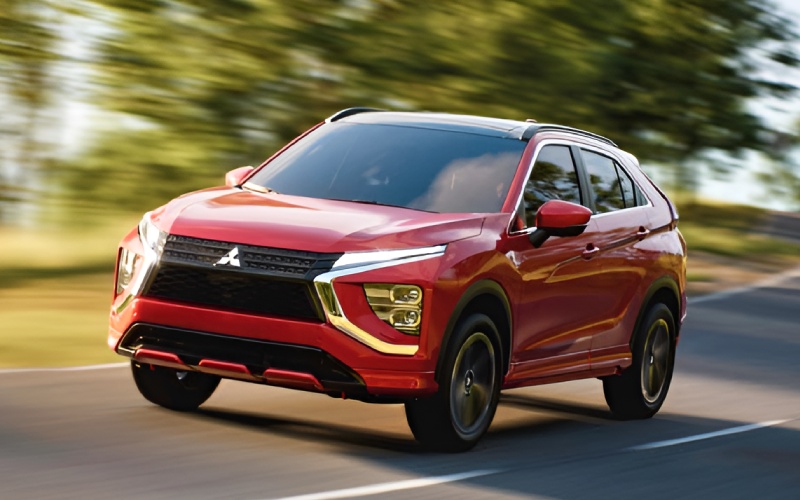
Montgomeryville Mitsubishi - Which AWD system handles everyday commutes better in Philadelphia, PA — S-AWC on the 2026 Eclipse Cross or i-Activ AWD on the 2026 Mazda CX-30?
All-wheel drive is no longer a nice-to-have in a compact SUV—it is a must for confidence in year-round commuting, school runs, and weekend getaways. Two systems lead the discussion in this class: Super-All Wheel Control (S-AWC) on the Eclipse Cross and i-Activ AWD® on the Mazda CX-30. Both prioritize traction, but they go about it differently. If your daily route mixes wet highways, plowed-but-slushy side streets, and the occasional gravel pull-off, understanding how these systems think—and how much control they give you—helps you choose the right partner for the conditions you actually face.
S-AWC is Mitsubishi’s integrated approach, coordinating torque split, individual wheel braking, and stability logic, then giving you simple, useful modes—Auto, Snow, and Gravel—to match the road ahead. Snow mode optimizes starts and corner exits on slick surfaces, while Gravel mode targets loose-surface stability and surefooted pull-aways. i-Activ AWD® monitors wheel slip and road inputs to preempt traction loss, complemented by G-Vectoring Control Plus for smooth transitions. The difference is that S-AWC blends driver-selectable modes with its predictive logic, so you can tell the vehicle what you are driving on and let the system meet you there. Mazda’s approach is seamless and confidence-inspiring, especially at speed, but it is less customizable for mixed, low-speed scenarios like unplowed parking areas and steep driveways.
- System philosophy: S-AWC integrates torque distribution with stability and braking control, while i-Activ AWD® focuses on predictive wheel-slip management.
- Driver control: S-AWC offers Auto, Snow, and Gravel modes; Mazda generally leaves control to the system, with limited user-selectable options.
- Low-speed grip: S-AWC’s targeted modes help with pull-aways on slick or loose surfaces; i-Activ AWD® is smooth and anticipatory but less tunable by the driver.
- Highway composure: Both are stable and settled; S-AWC keeps a calm, planted feel, while Mazda emphasizes responsive transitions with G-Vectoring Control Plus.
- Everyday utility: Eclipse Cross adds a factory-rated 1,500-pound tow spec and an available Multi-View Camera System—two features commuters and weekenders value.
There is more to the story than traction. The Eclipse Cross pairs S-AWC with available features that make winter and shoulder-season driving easier: a handsfree power tailgate for when your arms are full, paddle shifters for smarter engine braking on long descents, and the Multi-View Camera System to simplify tight, snowy parking. Mazda offers an available 360º View Monitor on upper trims and a refined drive feel, but it does not provide a U.S.-rated towing capacity or a handsfree liftgate. If your daily routine includes tight parking, muddy sidelines at the kids’ game, and the occasional home-improvement haul, these differences matter as much as AWD logic.
Montgomeryville Mitsubishi, serving Philadelphia, Norristown, and North Wales, helps you put AWD theory into practice. We walk you through how Snow and Gravel modes feel at the wheel, demonstrate low-speed control in tight spots, and align trim content with your commute. The goal is simple: deliver a setup that feels intuitive on day one and even better six months later, when weather really tests your vehicle’s mettle.
Frequently Asked Questions:
Does S-AWC make a noticeable difference in everyday driving?
Yes—because it pairs predictive traction logic with driver-selectable modes. You feel cleaner pull-aways in Snow, more stability on loose shoulders in Gravel, and calm, planted responses in Auto on dry or wet pavement.
How does Mazda’s i-Activ AWD® compare on winter roads?
It is smooth and anticipatory, maintaining stability as conditions change. For many drivers it feels natural at speed, though it offers less driver input for mixed low-speed conditions like unplowed lots or steep, slick driveways.
What non-AWD features matter for winter confidence?
Clear visibility and easy control. Eclipse Cross offers an available Multi-View Camera System, heated steering wheel, handsfree power tailgate, and paddle shifters to aid downhill control—small advantages that add up when conditions are messy.
Is there a towing difference?
Yes. Eclipse Cross is factory-rated to tow up to 1,500 pounds in U.S. specification. CX-30 is not rated to tow in the U.S., which limits utility for small trailers or light projects.
How can I test both systems back to back?
Schedule a drive with us. We will map a route that includes neighborhood streets, a stretch of highway, and low-speed maneuvers so you can feel how S-AWC and i-Activ AWD® behave where it counts—on the roads you actually drive.